"iEnrich"
UX Case Study

Overview
Problem
Many people now find it difficult to locate continuing education opportunities because there's currently no centralized platform which provides full and complete listings of all available local course options. In many places, course listings are often scattered across a wide variety of formats which usually include websites, print catalogs, as well as community bulletins. While there currently are a number of popular apps, such as Udemy and Skillshare, which now exist to help people locate online courses, there currently are very few resources to connect people with local classes.
Solution
"iEnrich" is a comprehensive one-stop digital platform which provides complete listings of all available local in-person continuing education classes and workshops in the area of the user.
Users & Audience
The primary users of the platform are most likely to be working adults ages 18-60 who are seeking professional development motivated by career advancement. Secondary users of the platform would be adults of all ages who are seeking to find enrichment, pursue hobbies or fulfill lifelong learning goals.
Project Scope
Desktop/Mobile Website, Branding
Tools
Figma, Figjam, Balsamiq Wireframes, Photoshop
Role
UX Designer (Visual Design, Interaction Design)
UX Researcher
Team
Self-Directed, with feedback from the instructors and peers
Duration
12 Weeks
Research
User Research
During interviews, many individuals were discouraged by the time constraints that are often required to find specific classes and workshops. Most interviewees stated their desire for a digital platform that would filter course data based on the time/schedule, location and the travel distance.
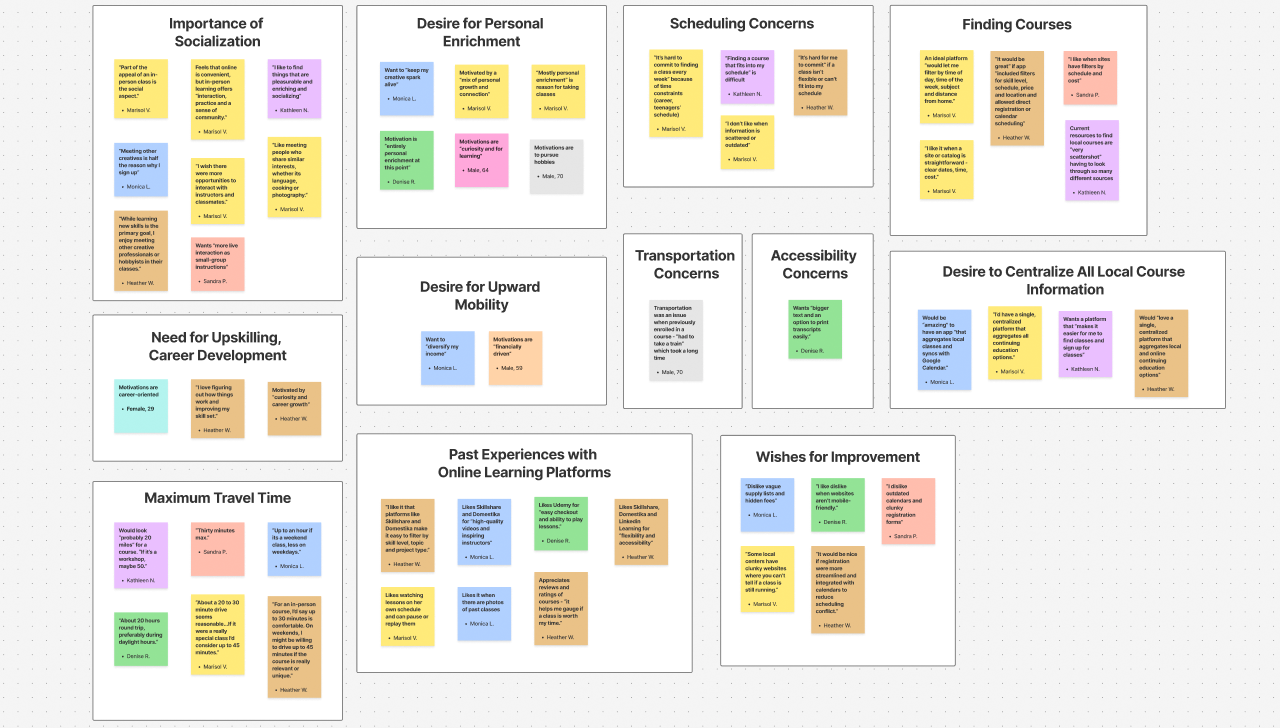
Affinity Map Based On Interviews
Research Insights
According to research from Arizton and Mordor Intelligence, the US adult continuing education market is currently valued between $66.9B and $70.7B (2024-2025) with some estimates predicting that it could grown upwards to $93B by 2028. Much of the growth is being driven by generative AI and the need for individuals to receive additional training or switch careers (Verified Market Research).
Most adults in the United States still prefer learning in a traditional classroom setting with classroom instruction now accounting for 41% of the US continuing education market (Arizton).
User Personas
Two personas representing the targeted demographics of this platform were developed based on the user insights collected from the interviews.
Persona #1
Represents demographic seeking career development, reskilling or upskilling
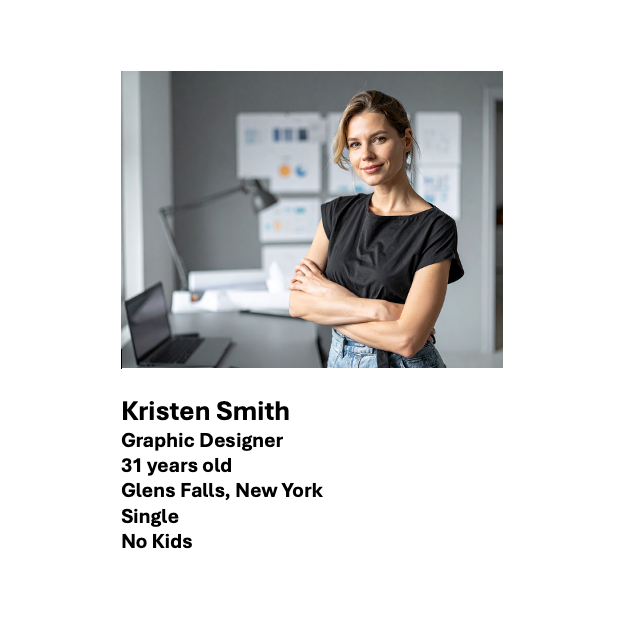
Persona #2
Represents demographic seeeking to pursue hobbies or fulfill lifelong learning goals

Business Goals
How will iEnrich earn revenue?
- Providers can pay for more visible placement of their courses on the website.
- Service will take a small commission from providers who allow for the payment of their courses through the website.
- Users can pay for premium accounts to access additional features and services which could include career counseling or the ability to save searches.
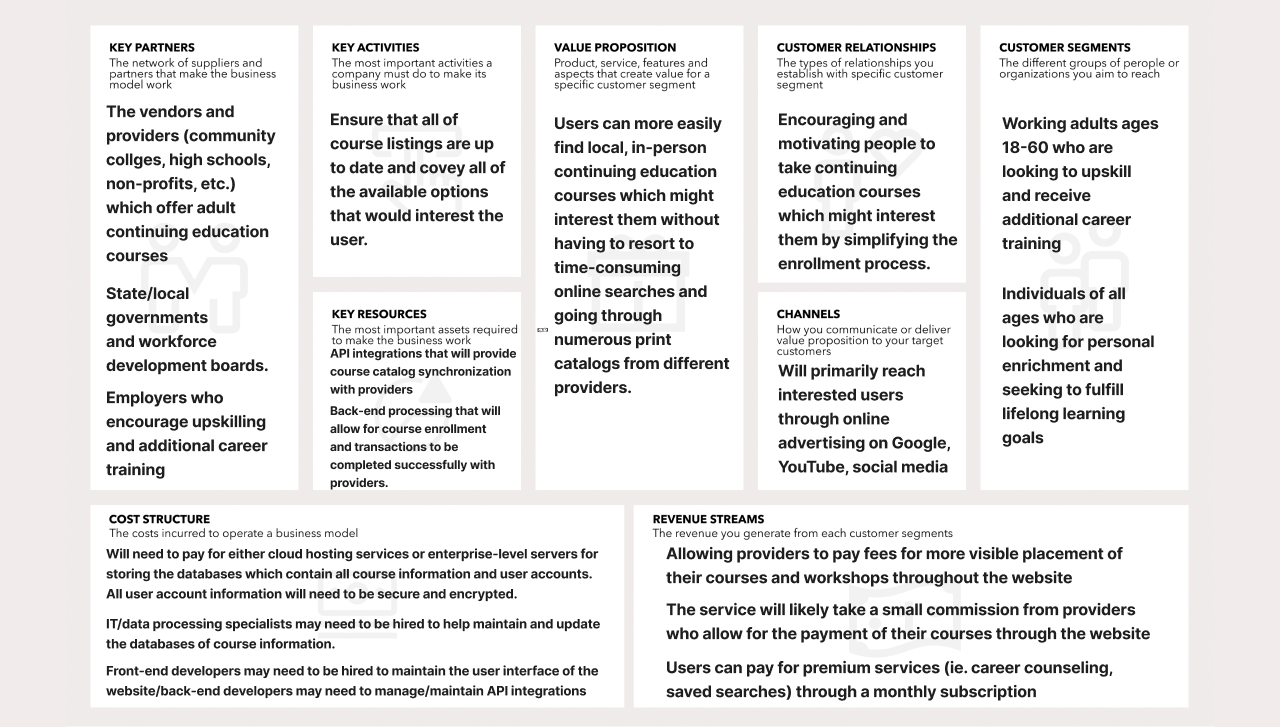
Business Model Canvas for iEnrich
Information Architecture (Sitemap)
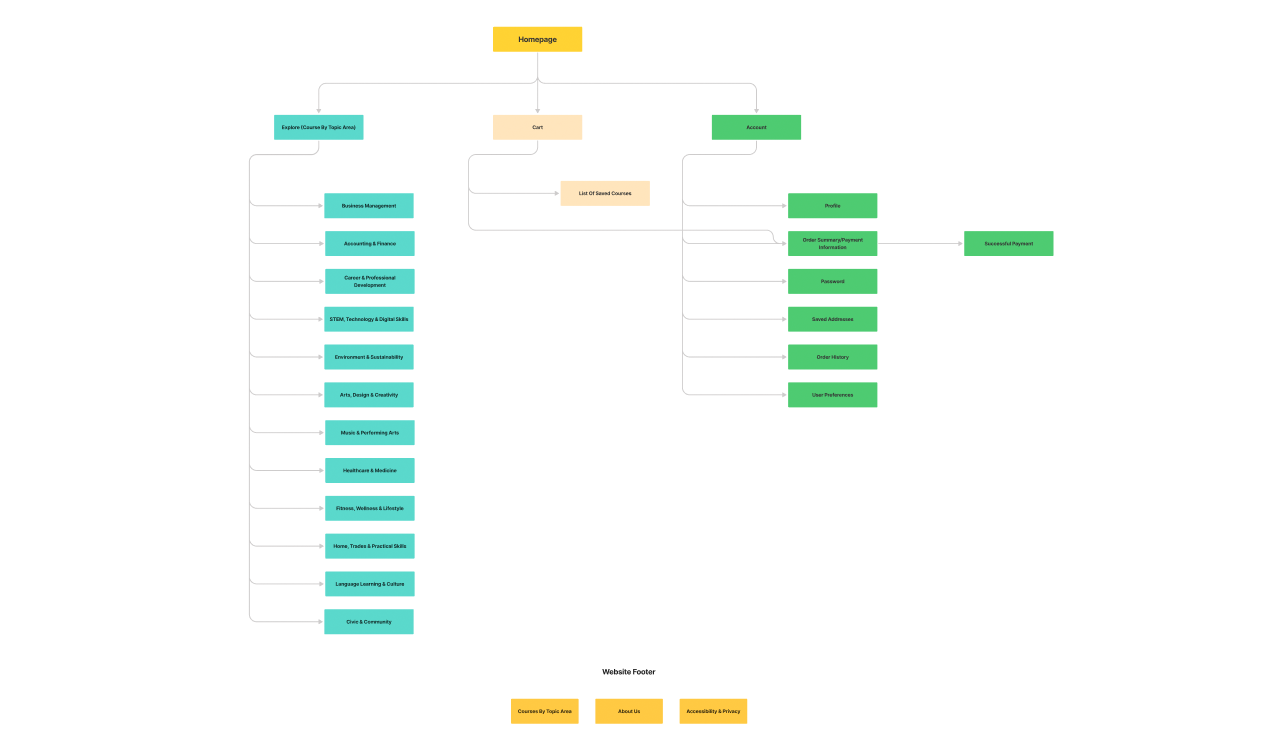
The information architecture of the site is based on the user flow of the traditional e-commerce retail model with a shopping-cart style interface where the items (course selections) can either be saved or purchased.
Design Process
Lo-Fi Wireframes
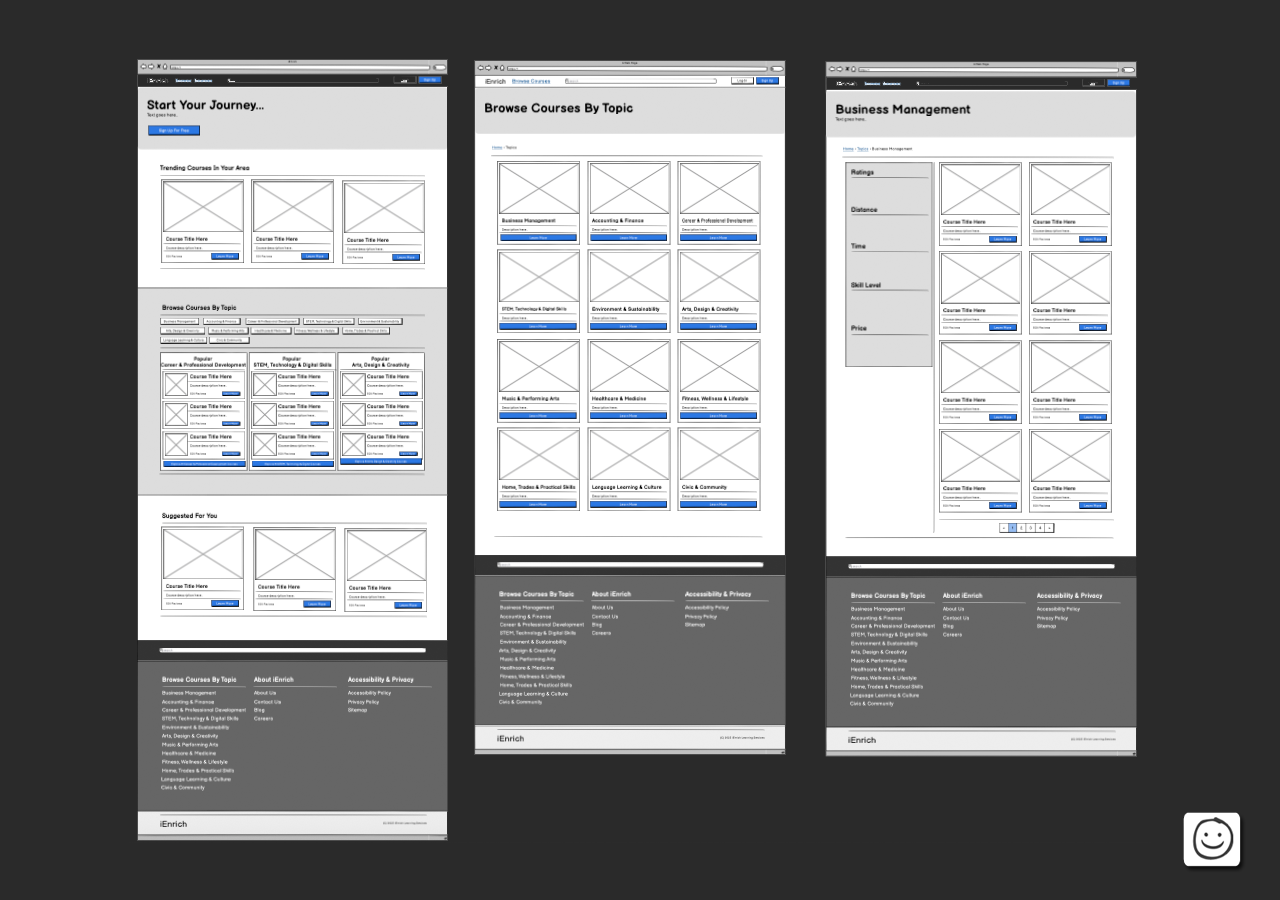
During the initial planning stages, a series of low-fidelity wireframes were developed in Balsamiq Mockups to create the preliminary UI designs.
Hi-Fi Wireframes
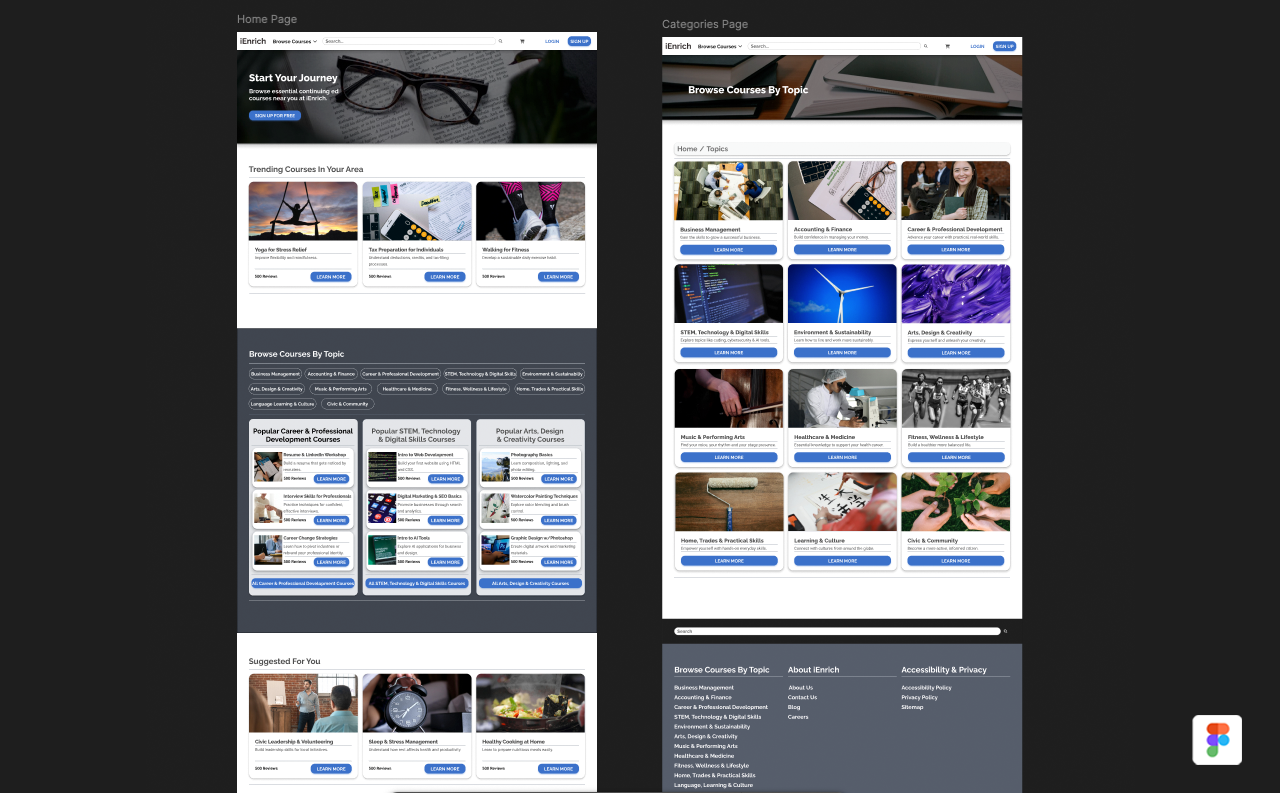
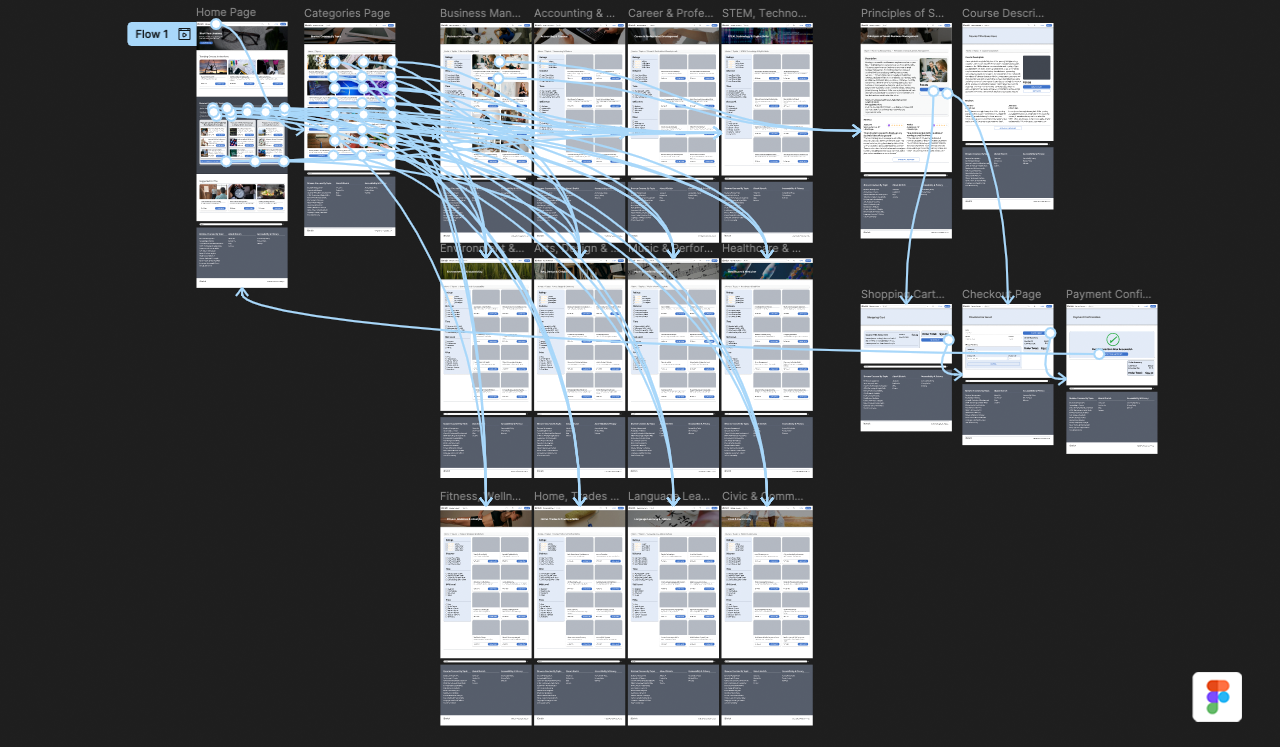
Figma was used to create the final clickable, interactive high-fidelity prototypes.
 View Interactive Prototype
UI Kit
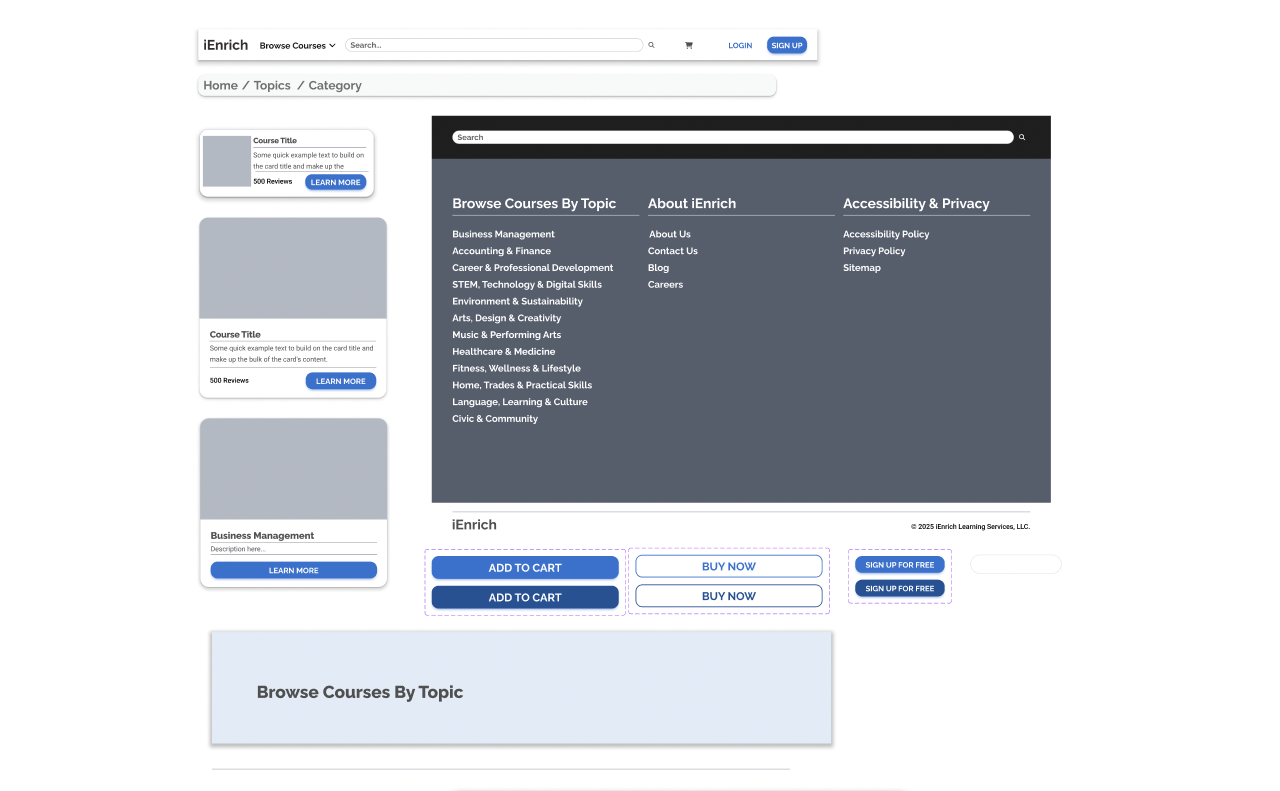
All Figma components were created from the Material Minimal UI Kit, a minimalist design system which integrates the Bootstrap framework with Google's Material Design principles.